
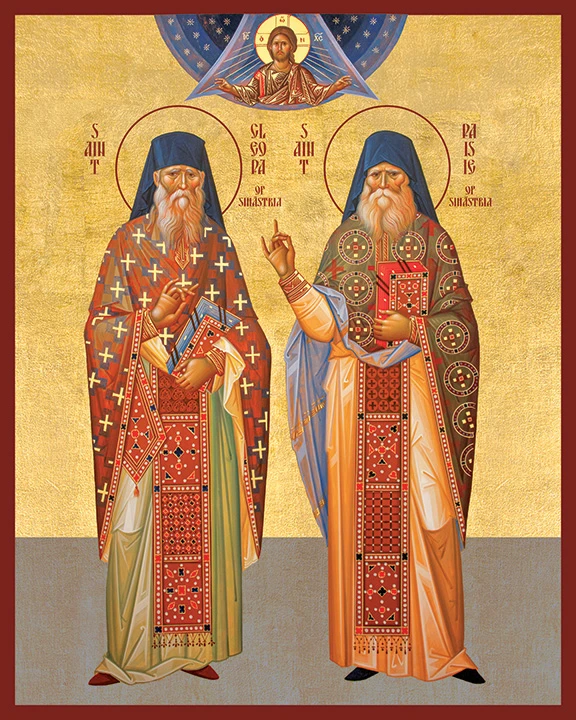
St. Cleopa of Sihastria + Commemorated on December 2
Elder Cleopa (Ilie) (April 10 , 1912 - December 2, 1998) was a very well-known monk and representative of the Romanian Orthodox Church and an archimandrite and abbot of the Sihastria Monastery.
Cleopa Ilie (lay name: Constantin) was born in Suliţa, Botoşani to a family of peasants. He was the fifth of ten children born to Alexandru Ilie. He attended the primary school in his village. Afterwards he was an apprentice for three years to the monk Paisie Olaru, who lived in seclusion at the Cozancea hermitage.
Together with his elder brother, Vasile, Ilie joined the community at Sihastria hermitage in December 1929. In 1935, he joined the army in the town of Botoşani, but returned a year later to the hermitage, where he was anointed a monk on August 2, 1937, taking the name "Cleopa" (i.e. "guide") at his baptism. In June 1942, he was appointed to hegumen deputy because of abbot Ioanichie Moroi's poor health.
On December 27, 1944, he was ordained a hierodeacon (deacon-monk) and on January 23, 1945 a hieromonk (priest-monk) by the archbishop Galaction Cordun, abbot of the Neamţ Monastery at the time. Afterwards he was officially appointed hegumen of the Sihastria Hermitage.
In 1947, the hermitage became a monastery and vice-archimandrite Cleopa Ilie became archimandrite on approval of Patriarch Nicodim. Because the Communist secret service was looking for him in 1948, he disappeared into the woods surrounding the monastery, staying there for six months. On August 30, 1949, he was appointed abbot of the Slatina Monastery in Suceava county, where he joined 30 other monks from the Sihastria Monastery community as a result of Patriarch Justinian’s decision.
There he founded a community of monks with over 80 people. Between 1952 and 1954 he was being chased again by the Securitate and, together with hieromonk Arsenie Papacioc, escaped to the Stanisoara Mountains. He was brought back to the monastery after two years upon Patriarch Justinian’s order.
In 1956 he returned to Sihastria monastery, where he had been anointed, and in the spring of 1959 he retired for the third time to the Neamţ Mountains, spending the next five years there. He returned to Sihastria in the fall of 1964, as confessor for the entire community and continued to give spiritual advice to both monks and lay people for the next 34 years. He died on December 2, 1998 at Sihăstria Monastery.
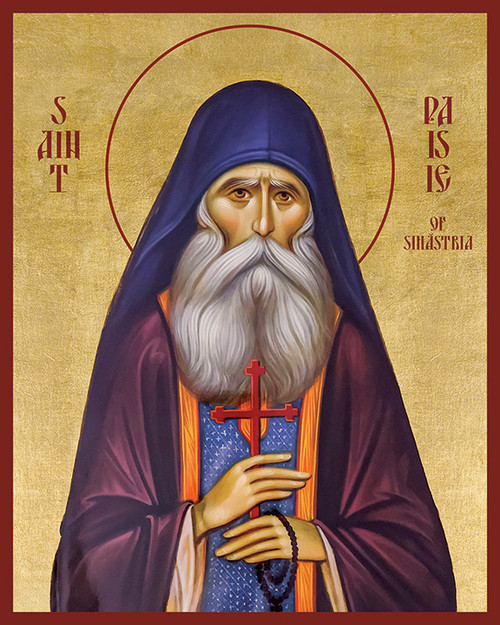
St. Paisie of Sihastria + Commemorated on December 2
Saint Paisius (1897-1990), born Peter Olaru, was a revered Romanian schemamonk and confessor whose profound spiritual influence extended to the nation’s greatest elders. His reputation was so strong that figures like Elder Justin Pârvu eagerly sought his counsel, with Pârvu once waiting two days outside Saint Paisius's cell just for the opportunity to confess. This widespread love and respect came from Saint Paisius's immense spiritual gifts and his unwavering dedication to his faith. From a young age, he felt a divine calling to monastic life, which he pursued after his service in World War I. His life journey, marked by humility and piety, is set to be formally recognized with his canonization as a saint in 2025.
After entering Cozancea Skete in 1921, he was tonsured with the name Paisie and quickly distinguished himself through his asceticism. Driven by a longing for solitary prayer, he built a small cell in the woods, where he divided his time between daily obedience at the skete and nightly vigils of prayer and fasting. Though he was strict with himself, his spiritual labors remained hidden from others. His deep spirituality began to attract disciples early in his life, including the future Archimandrite Cleopa Ilie, who would later become one of Romania’s most famous spiritual fathers. In this quiet life of prayer and obedience, Saint Paisius developed the profound humility and patience that would define his ministry.
One of Saint Paisius's most defining virtues was his boundless love for God and all of creation. This love manifested in his care for everything from flowers and birds to the sick and suffering. He served as the caregiver for ill members of his skete for many years, showcasing his compassion. After being ordained a hieromonk, he briefly served as abbot of Cozancea Skete but gave up the role to return to a life of quiet prayer. He then joined his disciple, Archimandrite Cleopa, at Sihăstria Monastery, where he served as a confessor for over 40 years. His reputation grew exponentially, attracting countless pilgrims seeking his grace-filled counsel.
Saint Paisius was renowned for his unique approach to confession. He was a beacon of love, joy, and blessing, receiving everyone at any time of the day or night. He never spoke of hell or strict canonical punishments, but instead greeted penitents with meekness and hope. With immense patience, he listened to confessions and prescribed penances according to each person's strength, always encouraging them to strive for salvation. Many times he would weep for his spiritual children, demonstrating a deep, compassionate heart that took on the burdens of others. His love and empathy were so powerful that under his stole, laymen and monks alike felt no distinction, and many found their lives transformed for the better.
The last years of Saint Paisius’s life were spent at the Sihla Skete, where his ministry as a confessor was at its most fruitful. Even after a broken leg and a period of blindness and deafness, he maintained his unwavering faith and joy. He continued to offer spiritual guidance and confess his closest disciples from his sickbed, often expressing a humble concern that he may have been too lenient as a spiritual father. On October 18, 1990, at the age of 93, he peacefully reposed in the Lord. His funeral was attended by hundreds of monks and thousands of laymen, a testament to the immense impact he had on the Romanian Orthodox Church. Saint Paisius remains a powerful example of how to combine the solitary life of a hesychast with a profound, active love for one's neighbor, winning countless souls for Christ through his gentle spirit.